
Isaiah

Electronics. Powerlifting. Privacy.

Isaiah

About

I'm an electronics and systems engineer with a focus on cybersecurity — because personal data security shouldn't be a luxury. In a world where every action is tracked and logged, I believe we deserve better defaults.

Education

Diploma in Electronics & Computer Engineering

Nanyang Polytechnic — Graduating April 2027

Specialization: Computer Engineering

Internship

Biomedical Engineering Department, Ng Teng Fong General Hospital

Notable coursework builds

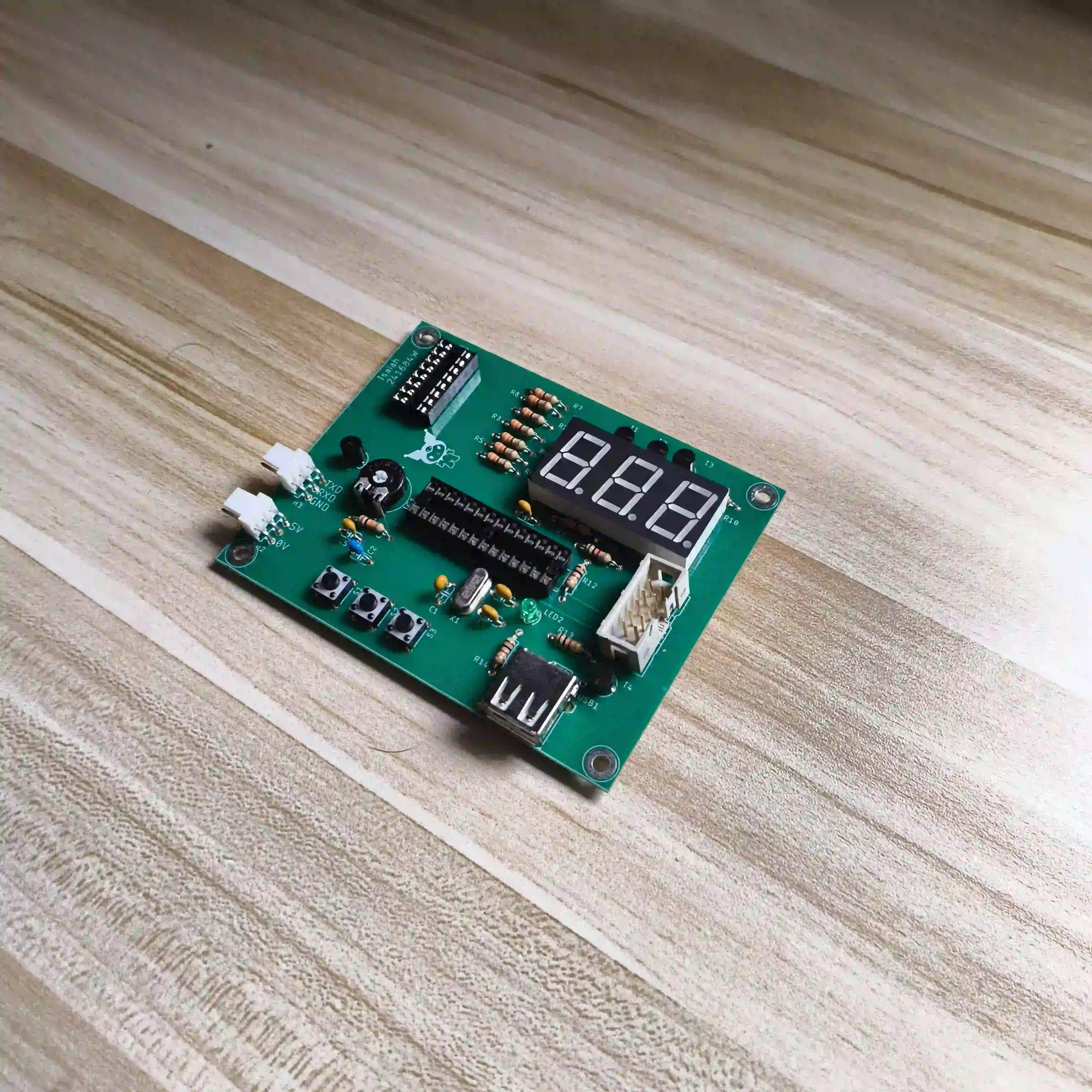
  • Designed and fabricated a custom PCB around an ATmega328PB microcontroller — 3-digit 7-segment display, temperature sensor, and regulated USB power output.
  • Building a portable MP3 player with an ESP32 devkit, integrating audio decoding, storage, and battery management from scratch.

How I Work

When I approach a problem, three questions come first:

  1. What does this affect? — map the blast radius before touching anything.
  2. Can I isolate it? — narrow the scope so the root cause is unambiguous.
  3. How do we solve it cost-effectively without compromising safety? — whether it's medical equipment on a patient or client data on a server, safety is non-negotiable.

I trust measured numbers over guesswork. I'd rather probe a rail with a multimeter than assume a voltage is "probably fine." Precision compounds — one careful measurement now saves three debugging sessions later.

Powerlifting

Six months in, training five days a week at ActiveSG and Bluegym (an underground gym beneath my apartment complex). No meets yet — right now it's about building the foundation.

140kg Squat
80kg Bench
140kg Deadlift

95kg bodyweight · 186cm

Powerlifting has reinforced something I already believed: slow, consistent effort beats flash. You don't PR every session. You show up anyway. That discipline carries straight into engineering.

Privacy & Security

Every device I own — laptop, desktop, phone — routes through Mullvad VPN with a hard kill switch. If a Mullvad server is unreachable, the device has no internet. Is it paranoia or threat-modeling as a baseline? It's both.

I'm working toward a self-hosted DNS resolver and VPN to reduce third-party dependency, but Mullvad is the pragmatic choice for now. The long-term goal is owning the entire chain from DNS query to exit node.

My primary phone is a Google Pixel 7 running GrapheneOS, an open-source, privacy-hardened mobile operating system. Google's age verification and data collection practices crossed a line for me, and Apple's walled garden isn't any better. GrapheneOS gives me control without compromise.

Skills

Electronics & Hardware

  • Soldering — through-hole and surface-mount, PCB assembly and rework
  • Oscilloscopes — signal analysis for wireless communications, waveform debugging
  • Multimeters — continuity testing, voltage and resistance measurement, circuit validation
  • Logic analyzers — digital signal capture at the chip level, protocol decoding

Programming

  • Low-level programming — microcontroller firmware in C, assembly fundamentals
  • PCB design — custom boards around ATmega and ESP32 platforms
  • Embedded systems — sensor integration, power management, peripheral communication
  • Web development — built and deployed this portfolio site with Astro
  • Application development — C# with Windows Forms for desktop tools and utilities

Networking & Systems

  • Network configuration — routing, firewalls, DNS, VLAN segmentation
  • System administration — Linux server setup and hardening, service management
  • VPN infrastructure — Mullvad deployment with kill-switch enforcement, self-hosted DNS planning
  • Mobile hardening — GrapheneOS deployment and threat-model configuration

AI & LLMs

  • How LLMs work — tokenization, attention mechanisms, next-token prediction, and the transformer architecture behind modern language models
  • Practical usage — effective prompt engineering for coding and research tasks, understanding model strengths and failure modes
  • Self-hosted AI — deploying and configuring LLM-powered tools on budget VPS hardware with Docker and Cloudflare Tunnels
  • Staying current — following developments across frontier models and open-source releases, separating signal from hype

Projects

ATmega328PB PCB assembly

ATmega328PB Temperature Monitor & Counter

C ATmega328PB EAGLE Embedded Systems SPI GPIO

Diploma coursework project built from the silicon up. Designed a custom PCB in EAGLE around the ATmega328PB microcontroller, then wrote the firmware in C to drive a 3-digit 7-segment display, read an analog temperature sensor, and handle three push-button inputs.

The firmware uses hardware timers and pin-change interrupts for responsive input handling. The display cycles between ambient temperature readings and a manual counter — three buttons let you increment, decrement, or jump by two. A regulated USB output rail delivers power to external devices (tested with a USB fan).

PCB and documentation submitted for grading. The assembled device is still on my bench.

gitlab.com/syzodidntmakeit/atmega328pb
Photo coming soon

KawaiiServer — NERV HQ Homelab

Docker Ubuntu Cloudflare SIEM GPU Passthrough Self-Hosted

A former gaming PC repurposed into a self-hosted homelab running 18 containerized services behind a Cloudflare Tunnel. Built for privacy, security, and learning infrastructure at scale.

Hardware: AMD Ryzen 5 5600 (6c/12t), Radeon RX 6600 XT (RDNA 2), 16 GB DDR4, 1 TB NVMe. The GPU is passed through to Docker for local LLM inference with llama.cpp via ROCm.

Services span four categories: user-facing apps (Homer dashboard, Vaultwarden, Seafile, Kiwix, Redlib, Memos, ArchiveBox), AI & tooling (llama.cpp, SearXNG, ChromaDB, VS Code Server), infrastructure (Portainer, Beszel monitoring, Cloudflared), and a full Wazuh SIEM/XDR stack for intrusion detection and log analysis.

Defense-in-depth throughout: kernel hardening via sysctl, a read-only Docker socket proxy, inter-service isolation through separate Docker networks (frontend + intranet), and qBittorrent locked behind a WireGuard VPN container with a hard kill switch.